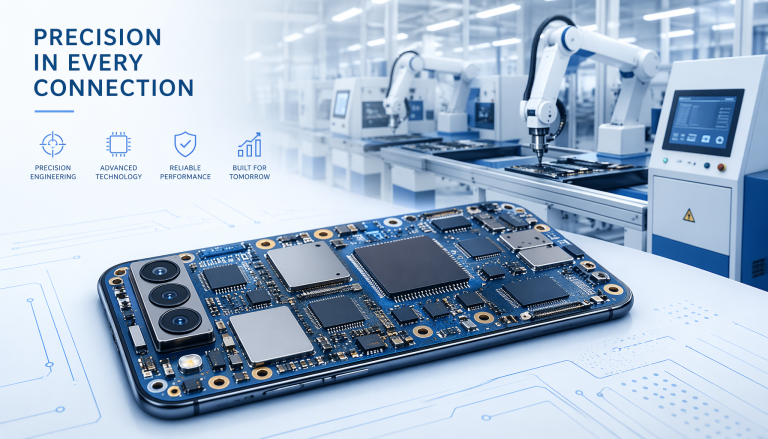
Design for Manufacturing (DFM) is one of the most critical yet frequently overlooked phases in hardware product development. A product that works beautifully as a prototype can become a nightmare on the production line if DFM principles weren’t applied from the start. This guide covers what DFM is, why it matters, and the practical steps every hardware founder and engineer should follow.
What Is DFM and Why Does It Matter?
DFM is the engineering practice of designing products so they are easy and cost-effective to manufacture at scale. Rather than handing a prototype to a factory and hoping for the best, DFM proactively optimises the design for the realities of production: material availability, tooling constraints, assembly processes, and quality control.
The numbers speak for themselves. Companies that apply DFM early in development typically reduce manufacturing costs by 30–50%, shorten time-to-market by weeks, and significantly lower defect rates during pilot runs and mass production. Without DFM, even well-funded hardware startups burn through their runway on rework, scrapped tooling, and delayed launches.
Core DFM Principles for Hardware Products
While DFM guidelines vary by manufacturing process (injection moulding, CNC machining, PCB assembly, etc.), several universal principles apply across all hardware categories:
Simplify Part Count
Every additional part adds cost—materials, tooling, assembly labour, and quality inspection points. The most elegant DFM move is often removing a part entirely. Combine functions where possible: a structural bracket that also serves as a heat sink eliminates a separate component and its assembly step.
Standardise Components
Use off-the-shelf common parts wherever possible. Custom screws, bespoke connectors, and proprietary fasteners increase BOM cost and lead time. Standard components are cheaper, readily available, and interchangeable across production runs. This is especially important during the DVT and PVT phases, where component substitutions can delay validation.
Design for Easy Assembly
Parts should be self-locating and self-fixturing where possible. Snap-fit features reduce screws and assembly time. Symmetrical parts eliminate orientation errors on the line. The golden rule: if a part can be assembled upside down, someone on the production floor will find that orientation eventually.
Optimise Tolerances
Tighter tolerances cost more. Specify only the tolerances your product actually needs—not what your CAD software defaults to. A ±0.5mm tolerance on a cosmetic cover may be perfectly acceptable, while ±0.05mm might be required for a bearing seat. Every precision callout adds inspection cost and increases scrap rates.
DFM by Manufacturing Process
Different processes demand different DFM strategies. Here are the most common ones for smart hardware products manufactured in China.
Injection Moulding DFM
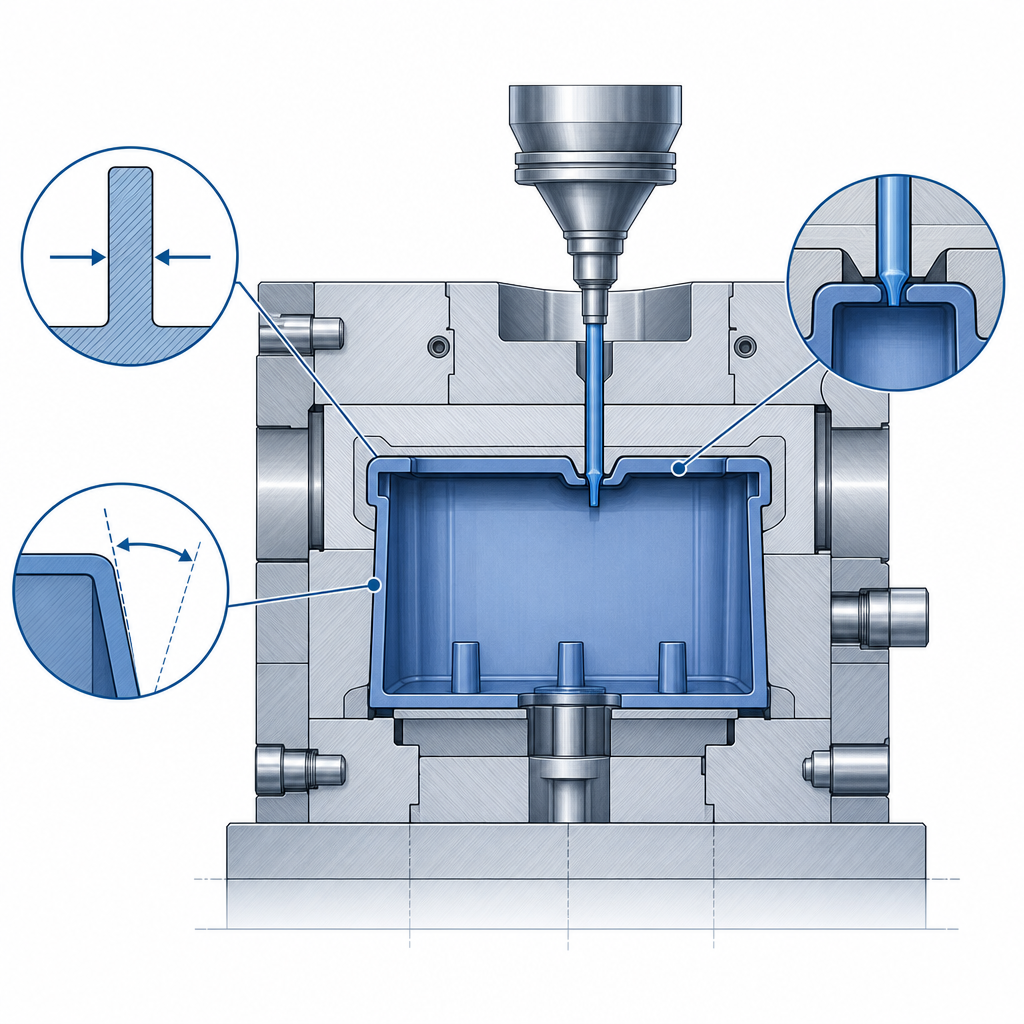
Injection moulding is the backbone of consumer hardware. Key DFM considerations:
- Uniform wall thickness: variations cause warping, sink marks, and longer cycle times. Keep walls between 1.5mm and 3.0mm for most thermoplastics.
- Draft angles: every vertical face needs at least 1–2 degrees of draft for clean ejection. Insufficient draft leads to scratched parts and mould damage.
- Avoid sharp corners: inside corners should have radius of at least 0.5x wall thickness to reduce stress concentrations and improve material flow.
- Gate and runner placement: work with your tooling engineer early to determine optimal gate location. Poor gate placement causes flow marks, weld lines, and short shots.
PCB Assembly DFM
For the electronics inside your product:
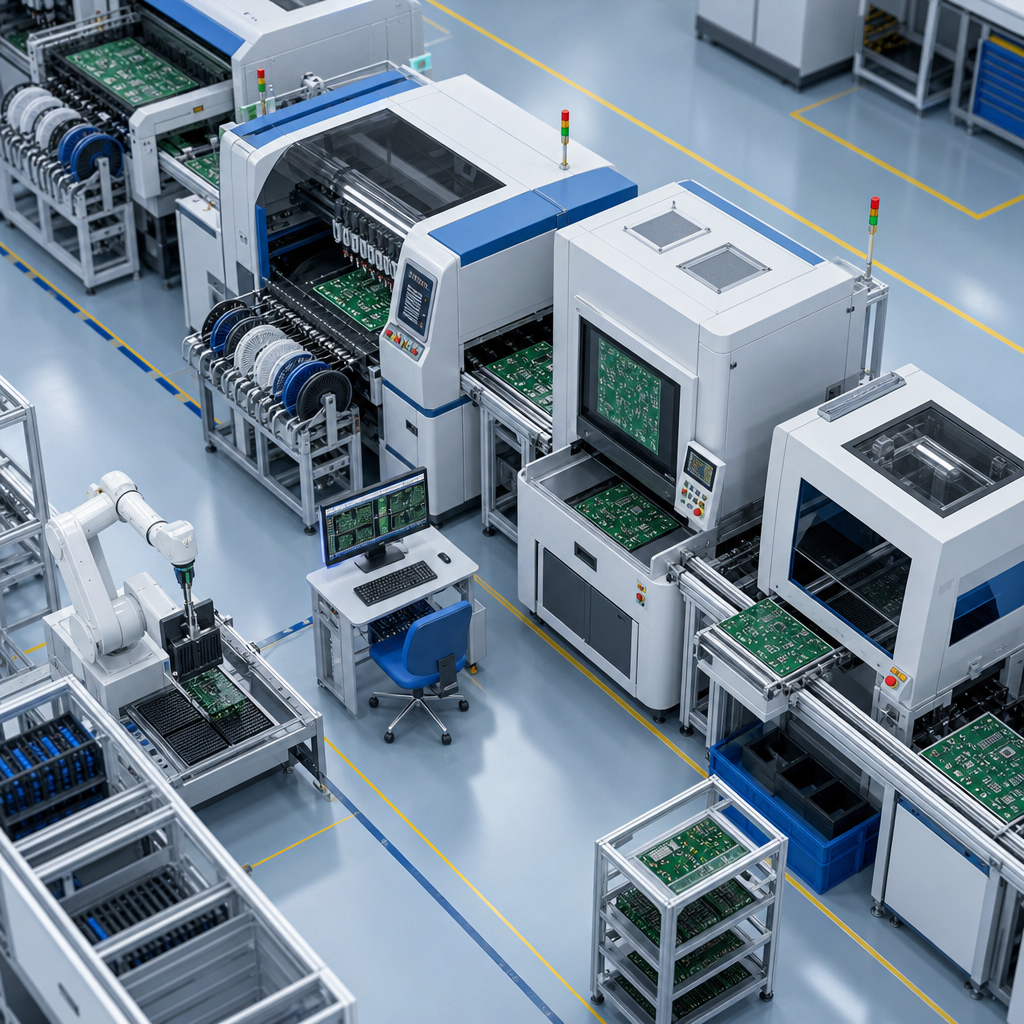
- Panelisation: design PCBs in panels for efficient pick-and-place assembly. Leave adequate tooling rails and fiducial marks.
- Component selection: prefer surface-mount (SMD) over through-hole where possible. SMD components are faster to assemble and enable double-sided population.
- Thermal management: provide adequate copper pour and thermal vias for power components. Discuss potting or heatsink options with your NPI partner during the feasibility review.
- Test points: include test pads for automated optical inspection (AOI) and in-circuit testing (ICT). This catches defects early in the assembly line rather than at final quality control.
Sheet Metal and Enclosure DFM
For enclosures, chassis, and structural components:
- Bend radius: minimum bend radius should be equal to material thickness. Tighter bends risk cracking and require special tooling.
- Hole placement: keep holes at least 2x material thickness from edges to prevent tearing and distortion during punching.
- Avoid complex geometries: deep draws, tight louvres, and intricate embossing increase tooling costs and cycle time. Simple enclosures can be produced cheaper and faster.
Integrating DFM into Your NPI Process
DFM isn’t a one-time review—it’s a discipline that should weave through every phase of the New Product Introduction (NPI) process.
EVT Phase: DFM Kickoff
During the Engineering Validation Test (EVT) phase, share early CAD models with your manufacturing partner. This is the cheapest time to make changes. Focus on:
- Identifying parts that violate core DFM rules (variable wall thickness, no draft, sharp corners)
- Selecting materials that are available and cost-stable
- Discussing preliminary tooling strategies and MOQ expectations
DVT Phase: Detailed DFM Review
The Design Validation Test (DVT) phase is where DFM really earns its keep. Before committing to production tooling, complete a formal DFM report with your factory. This should cover:
- Full tolerance analysis and stack-up
- Tooling feasibility for each mould and fixture
- Assembly sequence optimisation
- Component sourcing alternatives
- Supplier Vetting outcomes for critical parts
At this stage, changes cost more than EVT but far less than after tooling is cut. Many hardware startups skimp on DVT DFM and pay for it in PVT with expensive mould modifications.
PVT Phase: Production Verification
By the Production Validation Test (PVT) phase, most design decisions are locked. DFM focus shifts to process optimisation:
- Cycle time reduction opportunities
- Yield improvement through inspection station placement
- Packaging design for shipping efficiency
- Documentation for Mass Production quality control standards
Common DFM Mistakes Hardware Startups Make
Even experienced teams fall into these traps. Avoid them and your NPI journey will be significantly smoother.
Over-engineering the first version. Perfection is the enemy of production. Your v1.0 product doesn’t need aerospace-grade tolerances or exotic materials. Get to market with a solid, manufacturable design, then iterate.
Ignoring factory feedback. When your NPI partner says a feature is hard to make, listen. They’ve made thousands of similar parts. Their DFM recommendations come from real production experience, not theoretical simulation.
Waiting too long for DFM input. Involving the factory after tooling is already ordered is too late. Bring them in during EVT, when you can still change the design with a few keystrokes rather than expensive mould rework.
Choosing the Right NPI Partner for DFM
Not all manufacturing partners offer genuine DFM support. Some will take your design and produce it as-is without flagging potential issues. Look for a partner who:
- Provides a formal DFM report with specific recommendations
- Has in-house tooling engineers and quality teams
- Offers DFM as part of the NPI package, not a paid add-on
- Can reference past DFM improvements that saved clients time or money
For hardware teams manufacturing in China, working with a dedicated NPI partner like PSeeing ensures DFM is built into your process from day one. We coordinate between your design team and the factory floor, translating engineering intent into production reality.
Conclusion
DFM transforms hardware development from a costly trial-and-error process into a predictable, repeatable discipline. By applying DFM principles from the EVT phase, standardising components, and choosing a manufacturing partner with genuine DFM expertise, you will bring better products to market faster—and with significantly less financial risk.
Whether you are building your first pilot run or scaling to mass production, start DFM early. Your production timeline—and your investors—will thank you.